
Clinical skills get measured. How staff communicate with patients and families usually doesn't. Your teams practice the hard conversations with AI patients and family members, and each person gets a 1-to-5 score on each skill, linked to the moment in the conversation that earned it.
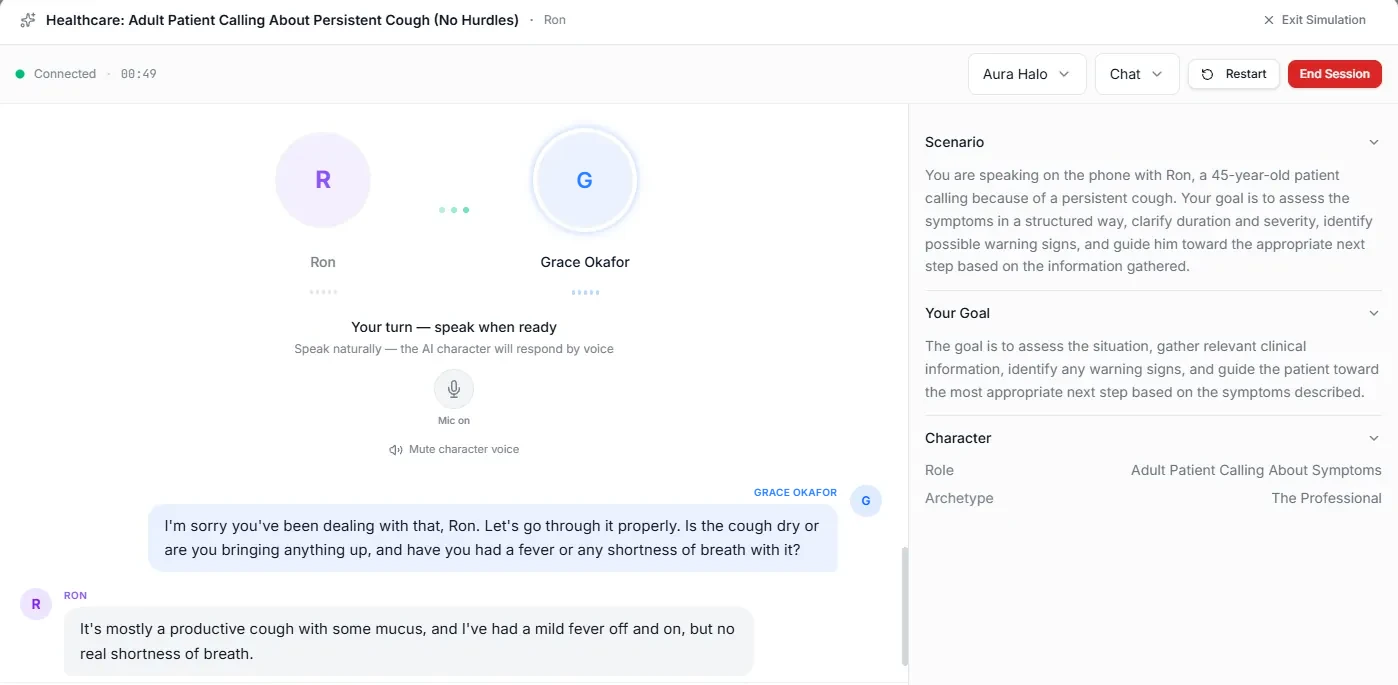


Hospitals, clinics and senior living teams use myQuest to practice conversations with AI patients and family members before they happen at the bedside. Each practice conversation is scored on empathy, clarity and teach-back, so managers can see who is ready and coach the rest.
"Nobody will tell me what's going on with my mother."
"So what am I supposed to do when I get home?"
"I'm not taking that medication. I've read about it."
Use skills from the myQuest skill library, or your own competency model. Every skill is scored 1 to 5 on every attempt.
Acknowledges what the patient or family feels before explaining anything.
Explains the plan in plain words, without jargon.
Asks the patient or family to explain the plan back, and fills any gap.
Give myQuest your protocols, discharge guides or service standards. myQuest drafts a Quest from it. Your team reviews and edits it, and the Quest ends with a scored practice conversation with a patient or family member who reacts the way real people do.
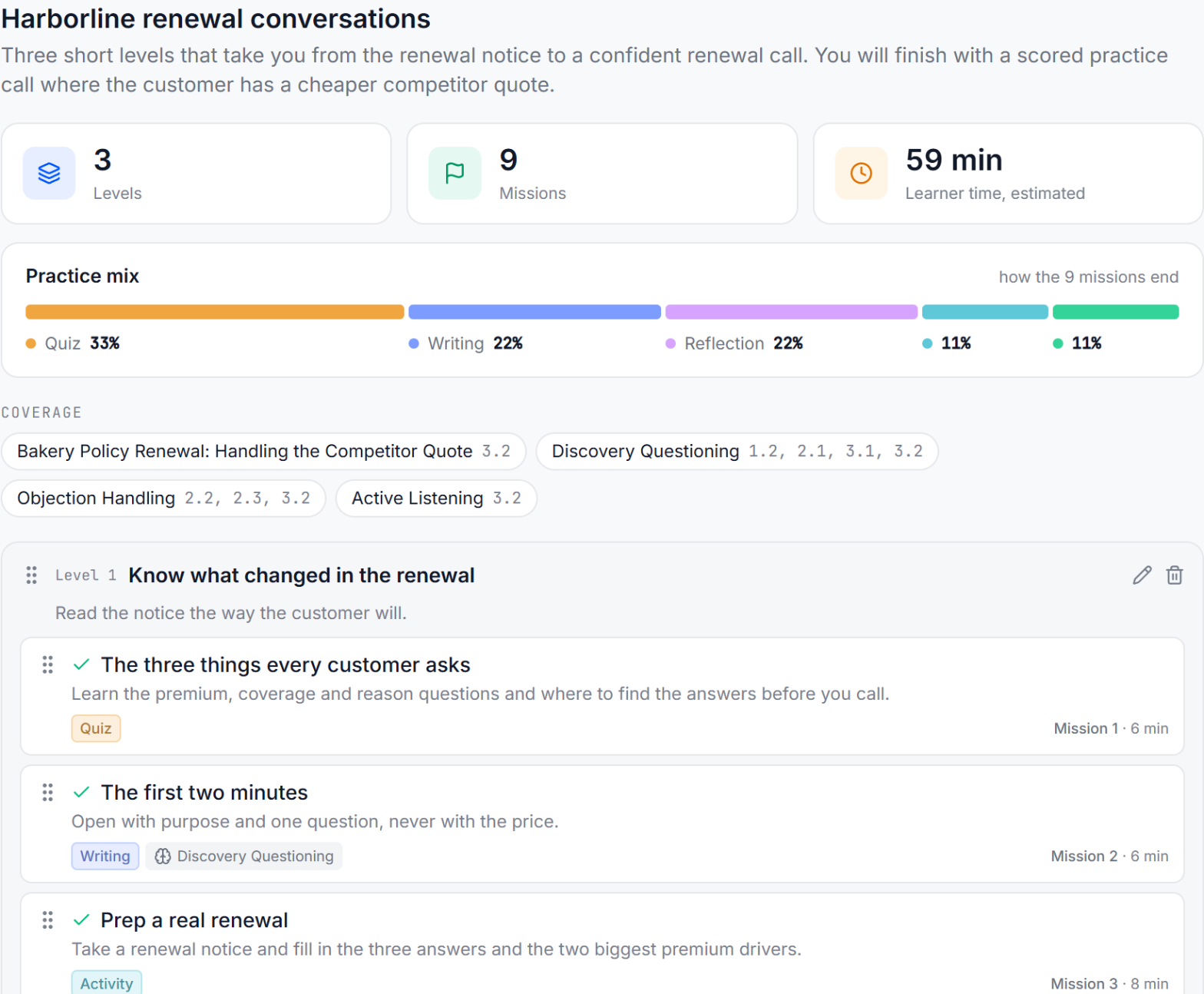
Every person is scored on the same skills. Sort the team by skill. Open any score to see the part of the conversation that produced it. Then coach the people who scored low on that skill.
Yes. Staff practice conversations with AI patients and family members, in voice or text. Each person gets a 1-to-5 score on each skill, linked to the moment in the conversation that earned it.
Yes. Every conversation is scored on empathy, clarity and teach-back, so managers can see who is ready and who needs more practice.
Yes. Quests are built from your protocols, discharge guides and service standards, so staff practice the conversations they actually have. The platform is designed for training and skills practice and is not intended to store patient information, so please don't enter real patient data.
Most practice conversations take 2 to 7 minutes, short enough to fit into a shift.
A typical pilot runs 30 days. You'll work with a myQuest instructional designer who runs your pilot, and we'll decide together what success looks like.