
Call quality reviews find the problem after the customer has already left. Your service reps practice the cancellation call, the billing dispute and the angry escalation with AI customers who push back, and each person gets a 1-to-5 score on each skill, linked to the moment in the conversation that earned it.
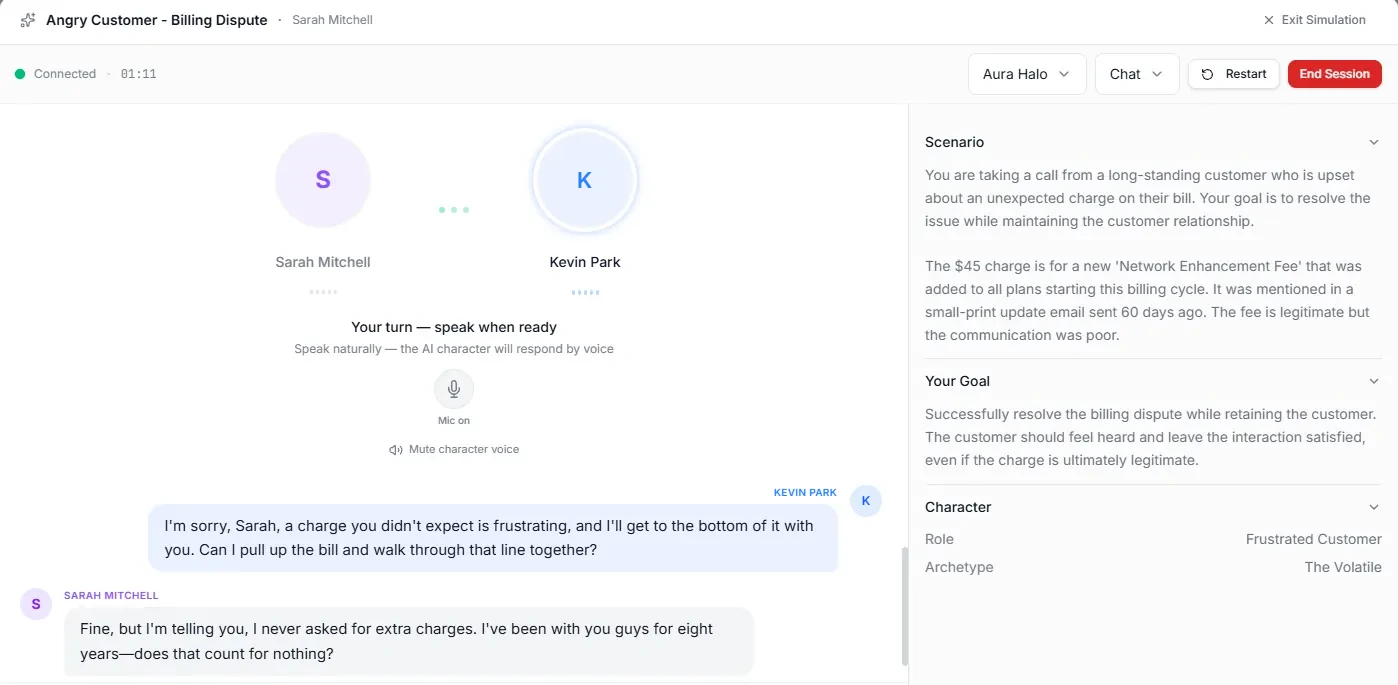
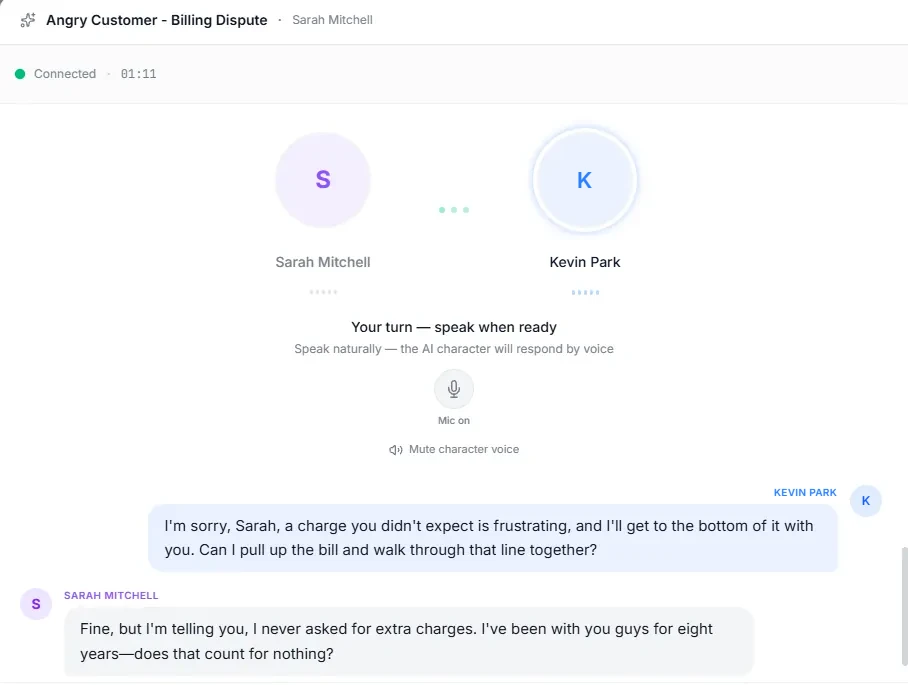

Service teams use myQuest to practice cancellation, complaint and billing calls with AI customers before they happen live. Each practice conversation is scored on listening, empathy and recovery, so team leads see who can keep the customer and coach the rest using the moment in the conversation where they struggled.
"Third billing error this quarter. I'm done. Just cancel it."
"I was charged twice and I want my money back today."
"I've explained this three times. Get me your manager."
Use skills from the myQuest skill library, or your own competency model. Every skill is scored 1 to 5 on every attempt.
Lets the customer finish, reflects back what they said and checks it before solving.
Acknowledges how the customer feels, in their words, without a script.
Fixes what can be fixed now, says what happens next and keeps the customer.
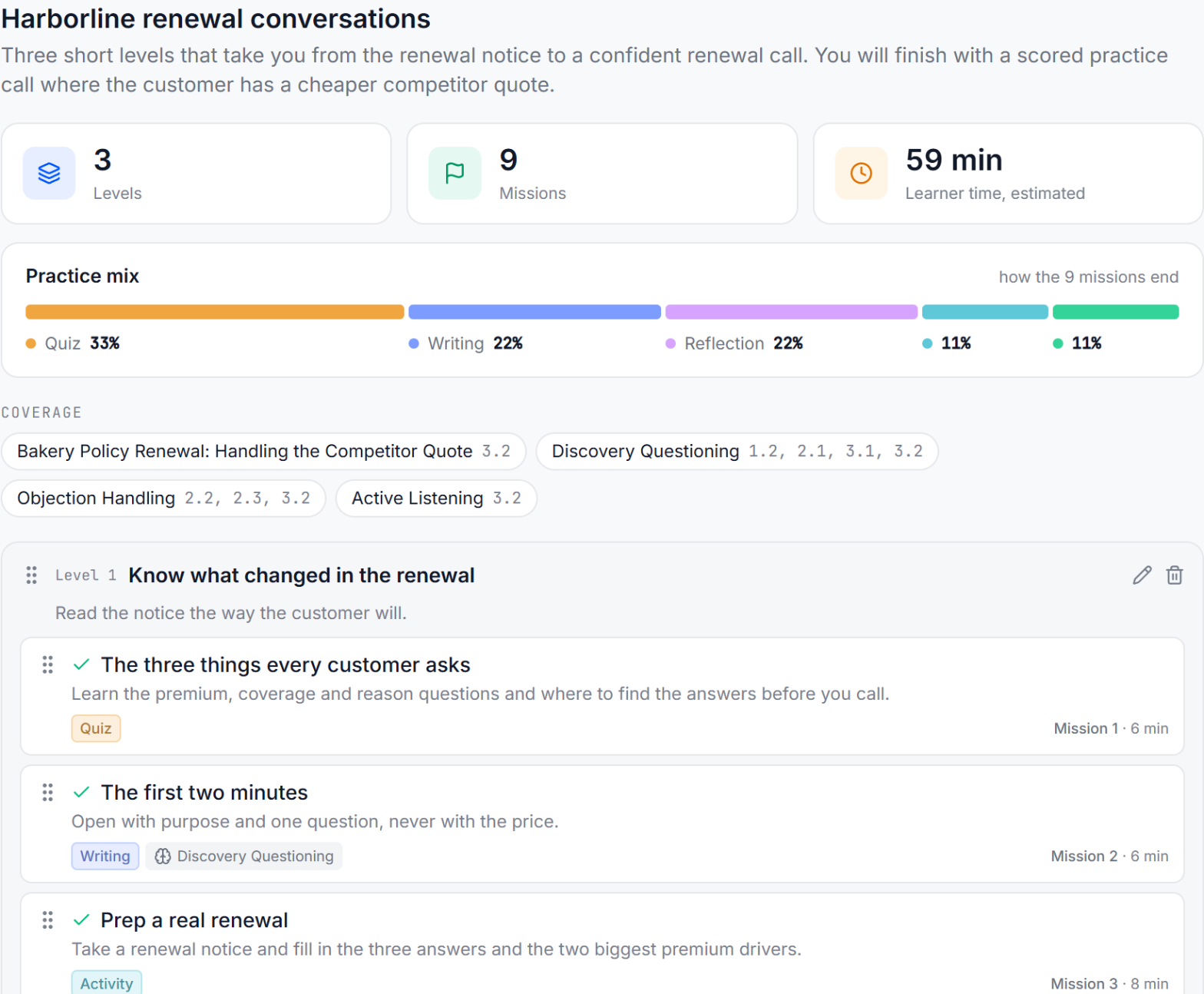
Give myQuest your service playbook, retention policies or call guides. myQuest drafts a Quest from it. Your team reviews and edits it, and the Quest ends with a scored practice conversation with a customer who pushes back the way yours do.
Every rep is scored on the same skills. Sort the team by skill. Open any score to see the part of the conversation that produced it. Then coach the people who scored low on that skill.
Yes. Reps practice cancellation, complaint and billing calls with AI customers who push back, in voice or text. Each person gets a 1-to-5 score on each skill, linked to the moment in the conversation that earned it.
Yes. Quests are built from your playbooks, policies and call guides, so customers raise the problems your team actually hears.
Call quality reviews look at a sample of calls after they happen. myQuest scores every rep on practice conversations, so gaps show up before they reach a customer.
Most practice conversations take 2 to 7 minutes, short enough to practice between real calls.
A typical pilot runs 30 days. You'll work with a myQuest instructional designer who runs your pilot, and we'll decide together what success looks like.