
Most reps know the pitch. Deals are usually lost later, when a rep asks discovery questions, handles a price objection, or asks for the sale. Your reps practice those calls with AI customers who push back, and each person gets a 1-to-5 score on each skill, linked to the moment in the conversation that earned it.
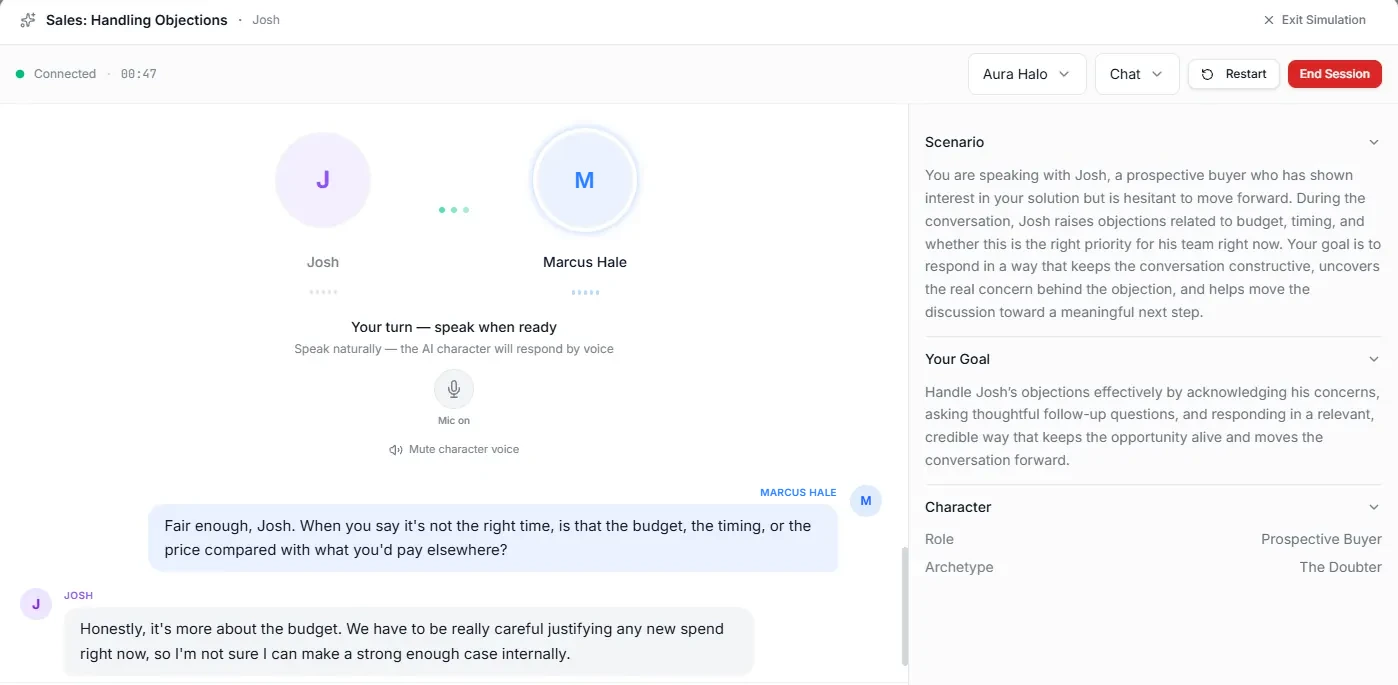
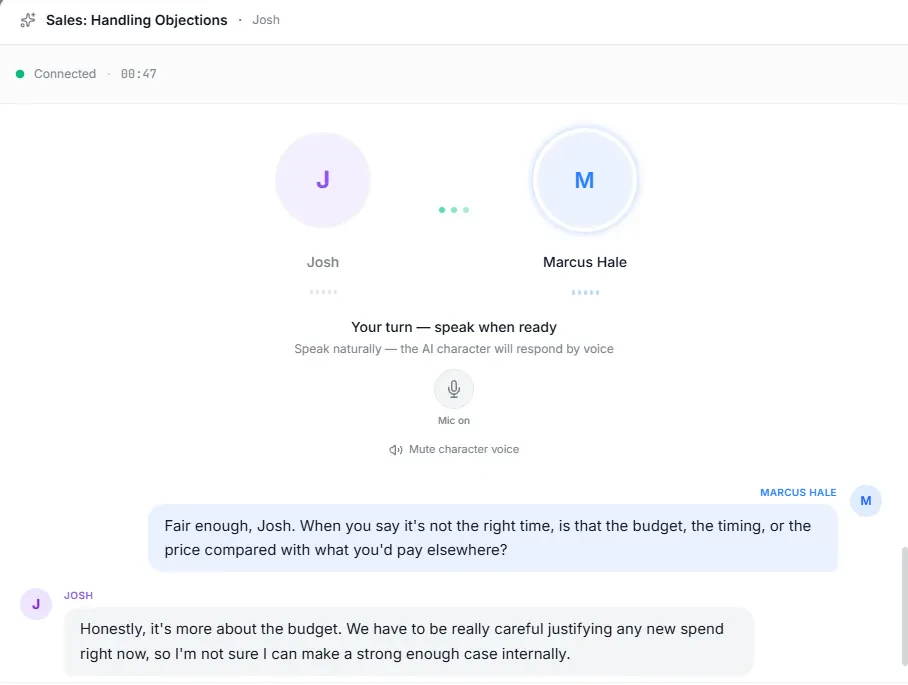
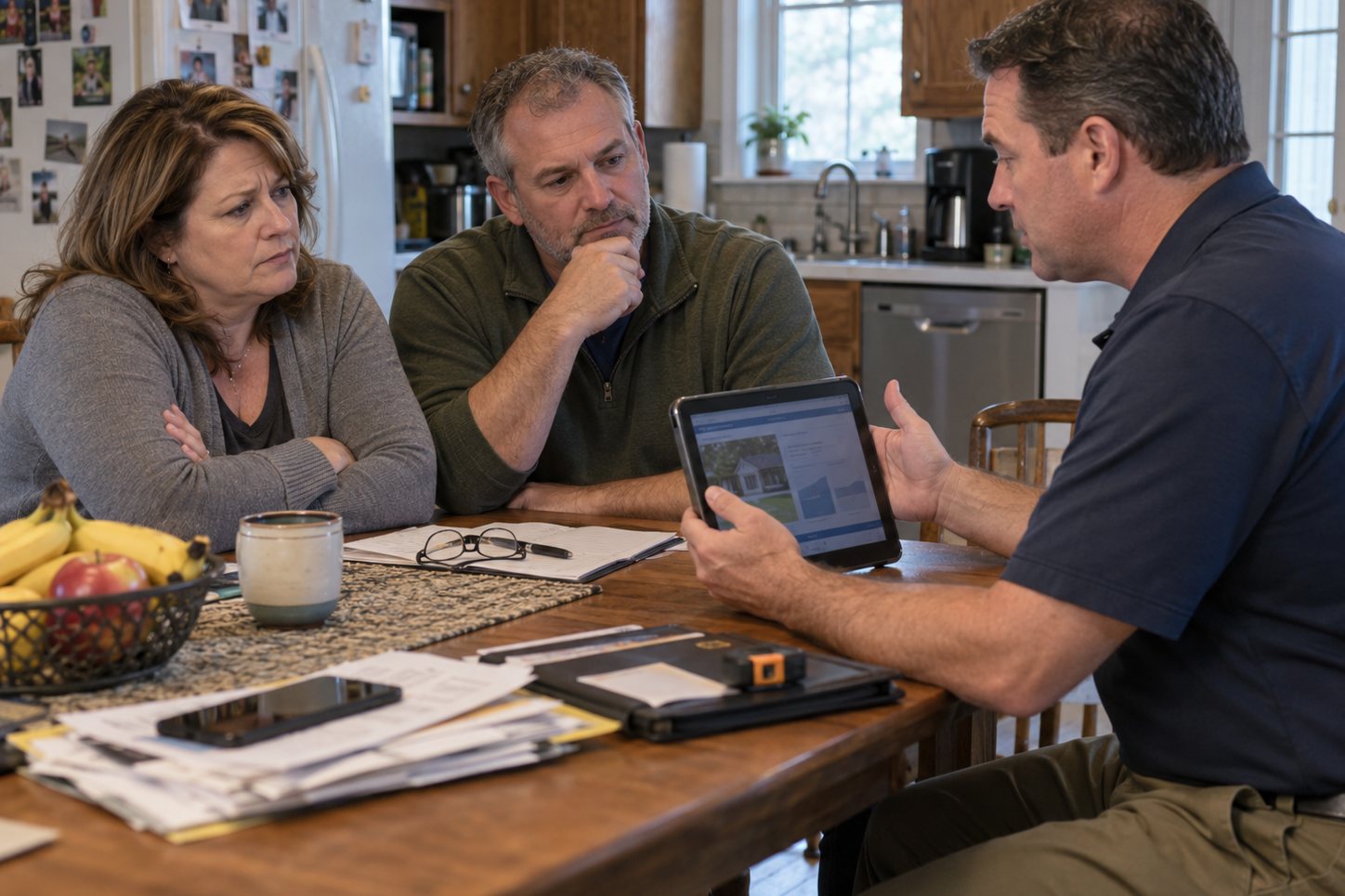
Sales teams use myQuest to practice discovery, objection handling and closing with AI customers before the real call. Each conversation is scored on the sales skills your team uses, so managers see which reps are ready and coach the rest using the point in the practice conversation where they struggled.
"Your competitor came in 20% lower. Why should I pay more?"
"This looks good, but we're going to wait until next quarter."
"Just send me the pricing and I'll look at it."
Use skills from the myQuest skill library, or your own competency model. Every skill is scored 1 to 5 on every attempt.
Asks the questions that uncover the real problem and what it costs, before talking price.
Acknowledges the concern, finds what is behind it and explains what the customer gets for the price instead of offering a discount.
Asks for a clear next step and confirms who does what, and by when.
Give myQuest your playbook, objection guide or product sheets. myQuest drafts a Quest from it. Your team reviews and edits it, and the Quest ends with a scored practice conversation with a buyer who pushes back the way yours do.
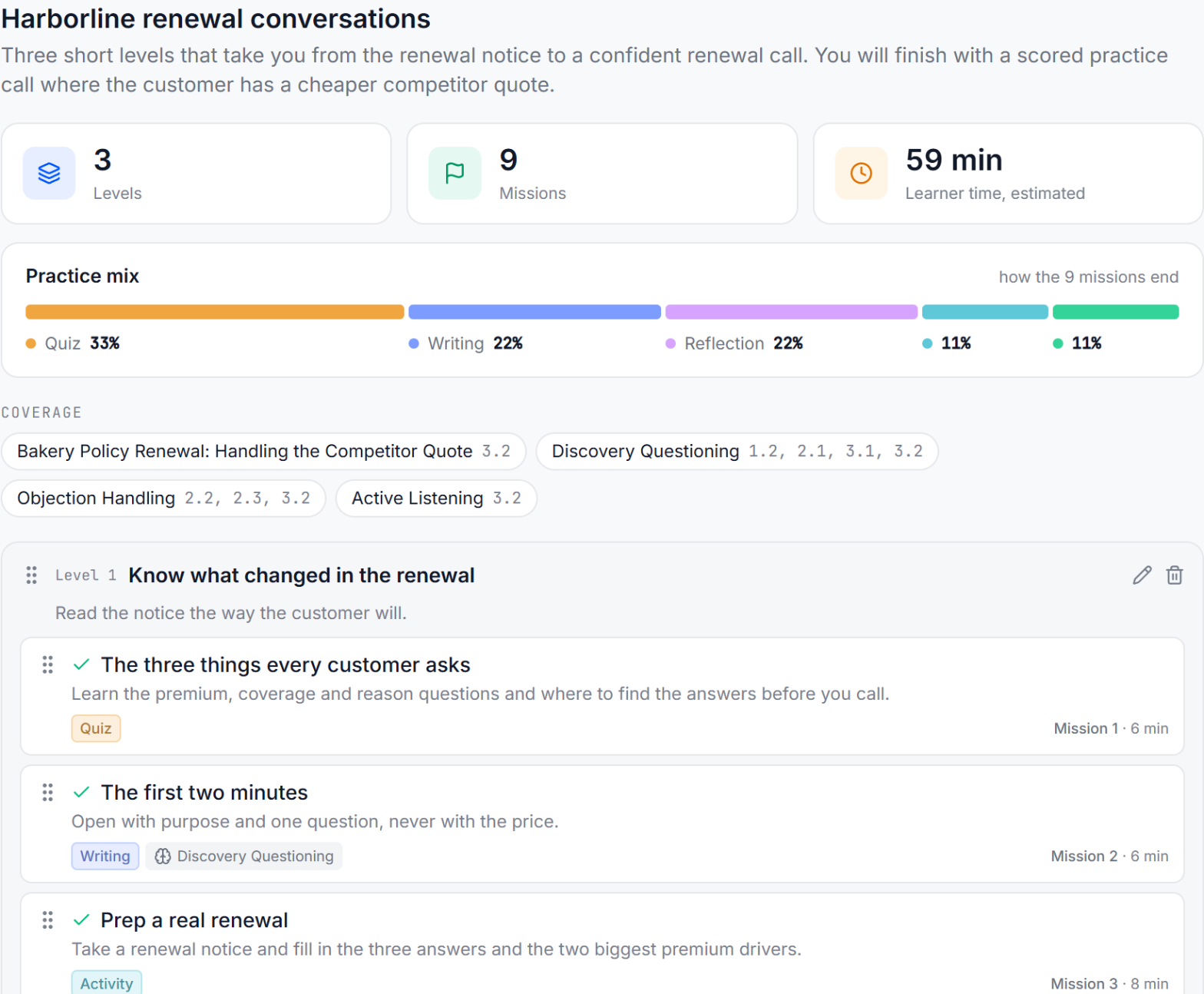
Every rep is scored on the same skills. Sort the team by skill. Open any score to see the part of the conversation that produced it. Then coach the people who scored low on that skill.
Yes. Reps practice discovery, objection and closing calls with AI customers who push back, in voice or text. Each person gets a 1-to-5 score on each skill, linked to the moment in the conversation that earned it.
Yes. Quests are built from your playbooks, objection guides and product sheets, so buyers raise the objections your team actually hears.
Most practice conversations take 2 to 7 minutes, short enough to practice between real calls.
No. It shows managers which skills each rep scored lowest on, so coaching time goes to the right skill.
A typical pilot runs 30 days. You'll work with a myQuest instructional designer who runs your pilot, and we'll decide together what success looks like.