
StressPal adopts a team-centric approach to building sustainable resilience and collaborative cultures while expanding access to evidence-based training at a lower cost. Its digital resilience program and peer-support platform were developed for healthcare and allied professionals, and their families, to address high levels of distress, burnout, and stress-related health conditions.
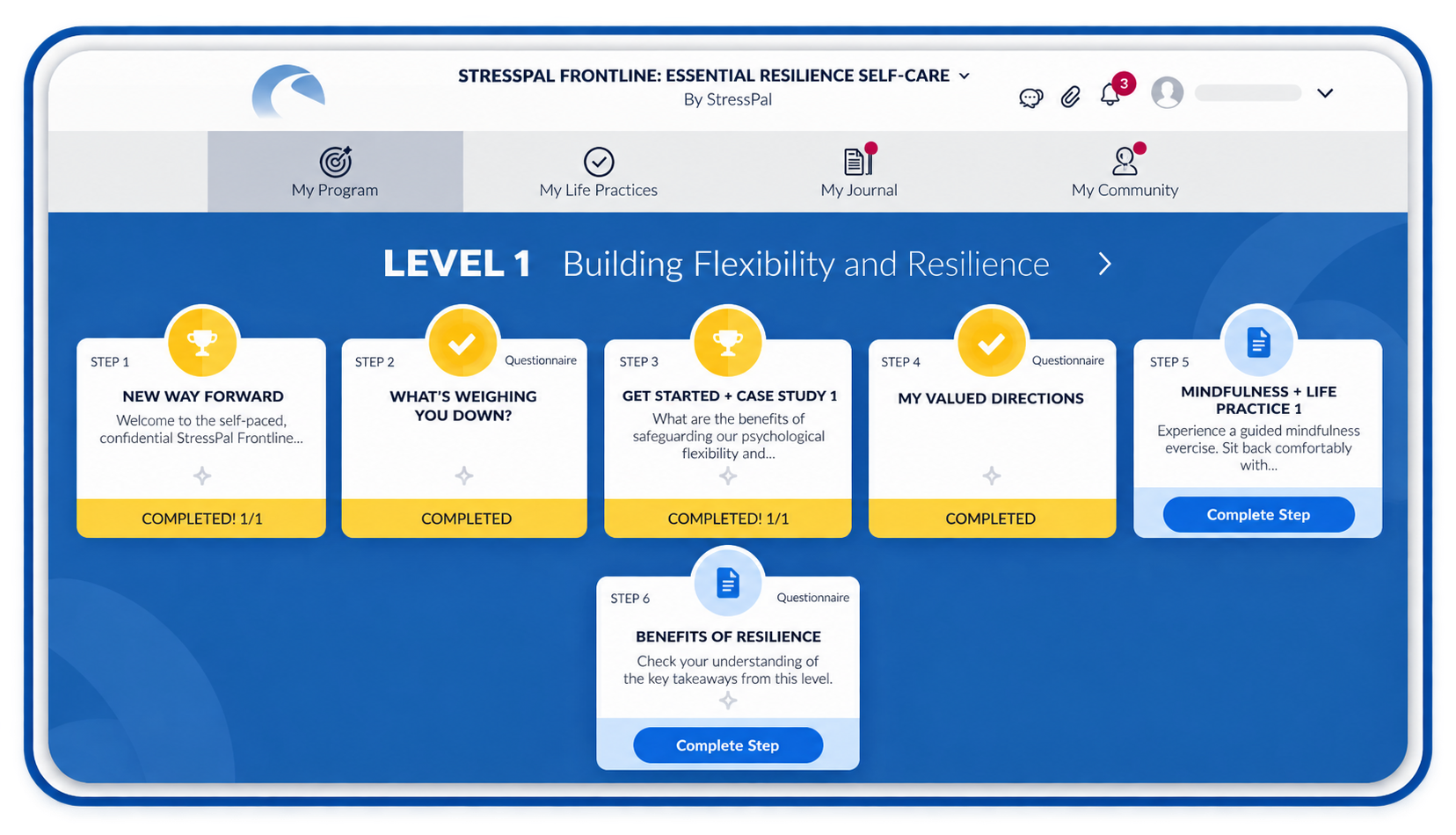
StressPal Frontline is a comprehensive digital resilience training program specifically designed for healthcare workers. The program focuses on strengthening psychological flexibility and stress resilience through practical, evidence-based approaches that participants can apply in their professional and personal lives.
StressPal leverages myQuest's self-directed and collaborative learning capabilities to provide participants with a structured and engaging training program.
Participants build a foundation in practical, evidence-based strategies for navigating high-pressure situations and interactions. Rather than simply consuming educational content, they are encouraged to reflect on what they learn, practice new strategies in their daily lives, and gradually develop a personalized resilience toolkit.
The StressPal Frontline program is designed as an approximately six-week, self-paced learning experience consisting of brief modules, follow-up resources, and a peer engagement community. The learning experience incorporates action-based learning, personalized life-practice reporting, storytelling, game-like features, and automated reminders to support continued engagement and participation.
StressPal also incorporates interactive activities within the myQuest platform, including journaling, reflection exercises, goal setting, and practical application. These activities encourage participants to connect the learning to their own experiences, build self-awareness, and develop strategies they can use in real-life situations.
In addition, StressPal utilizes myQuest's built-in communication tools to facilitate interaction and support among participants and mentors selected by participating organizations. Participants can ask questions, share experiences, engage in discussions with peers and mentors, and receive guidance and encouragement throughout the program.
Upon completion of the core training, eligible participants can also earn continuing education credits, while ongoing support modules remain available throughout the subscription term.
Before the development of the StressPal program, its clinician-led faculty delivered one-on-one sessions and small-group workshops.
As the need for stress and resilience support increased, this model presented limitations in terms of scalability, accessibility, scheduling, and cost.
Advances in digital learning and behavioral health research created an opportunity to deliver evidence-based training through a self-directed, action-based learning experience while maintaining opportunities for practice, reflection, and peer engagement.
Using myQuest enabled StressPal to make its program available to broader groups of healthcare professionals while reducing logistical barriers and supporting participants across different roles, organizations, and locations.
These concerns were addressed through close collaboration with the myQuest team throughout development and implementation.
StressPal has collected data from clinicians, care team members, and non-clinician healthcare professionals participating in the StressPal Frontline program delivered through myQuest.
In addition to StressPal's own program and participant data, the outcomes of StressPal Frontline were evaluated in a peer-reviewed study published in JMIR Formative Research in July 2026.
The study analyzed pre- and post-program assessments from 76 healthcare workers who completed the StressPal Frontline program and found a statistically significant reduction in perceived stress.
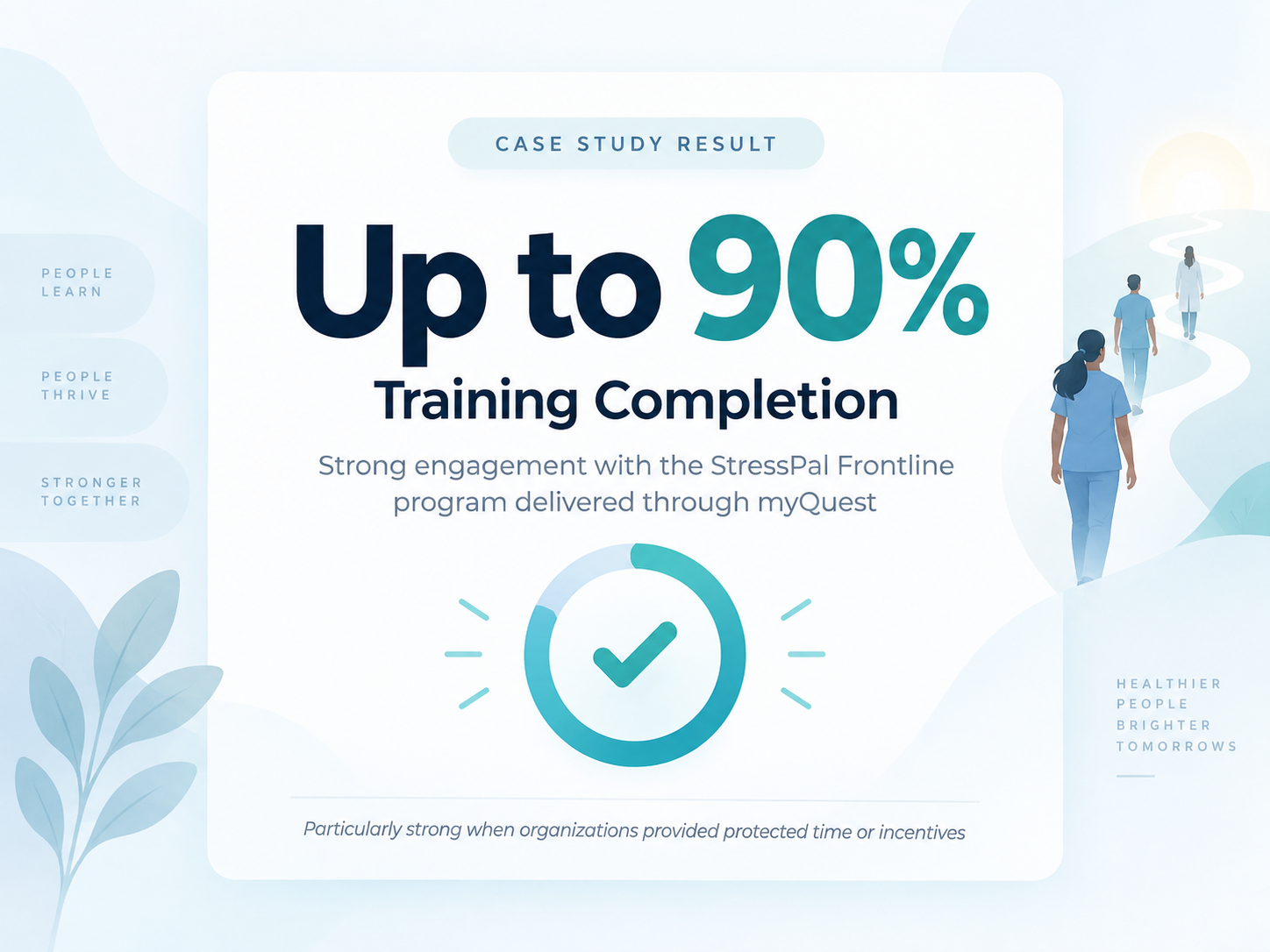
StressPal observed training completion rates of up to 90%.
Completion was particularly strong when participating organizations provided protected learning time or incentives for employees to complete the program.
These high completion rates demonstrate strong engagement with a self-paced program designed for professionals working in demanding healthcare environments.
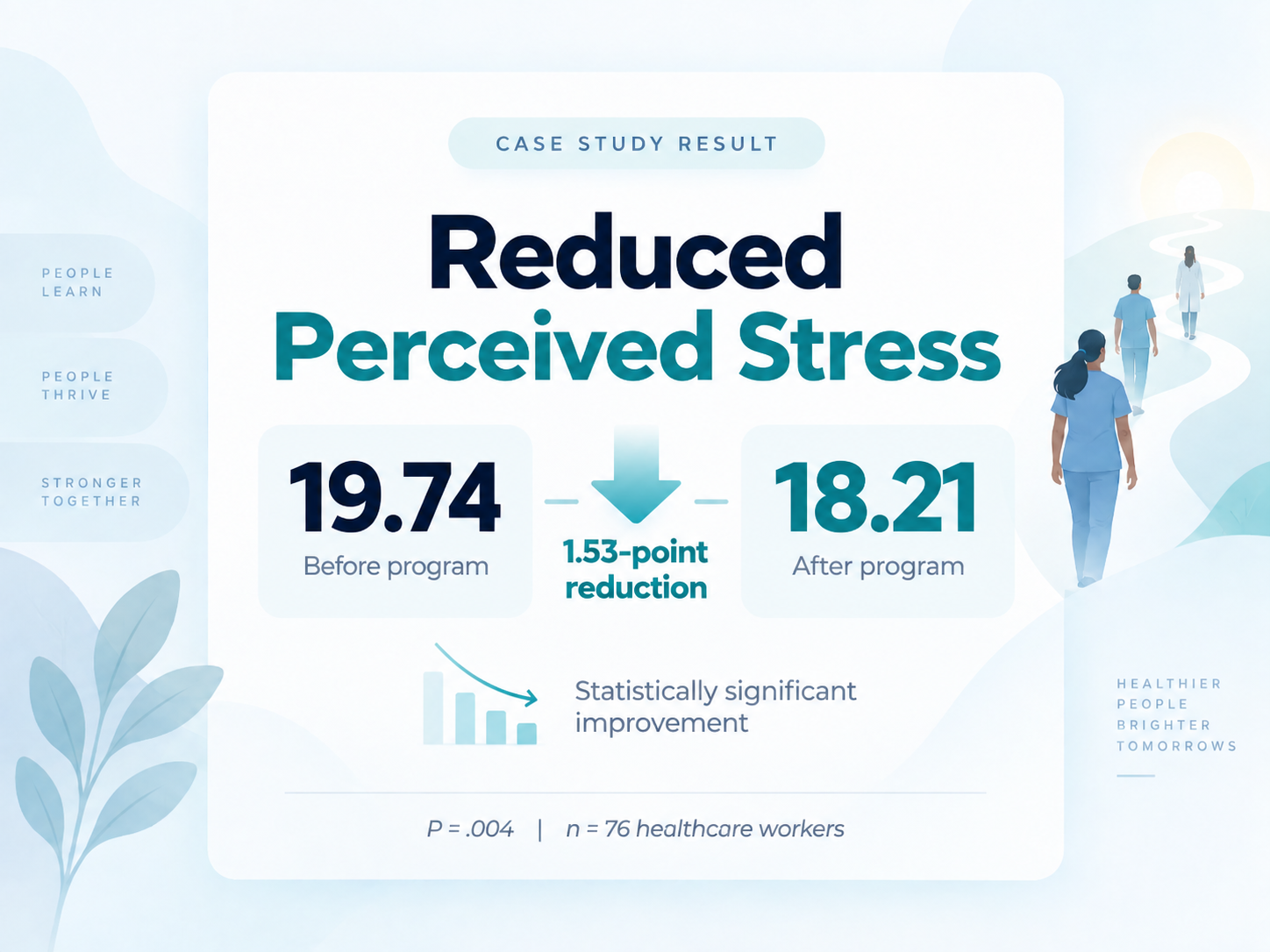
In the 2026 peer-reviewed study, participants' average Perceived Stress Scale score decreased from:
19.74 before the program
to
18.21 after the program
This represents a 1.53-point reduction in perceived stress.
The improvement was statistically significant:
P = .004
with an effect size of:
Cohen's d = 0.34
indicating a small-to-medium effect.
The researchers concluded that participation in the StressPal Frontline program was associated with positive outcomes in reducing perceived stress among healthcare workers.
The study also examined changes in participants' stress categories.
Among the 76 participants:
The movement across stress categories was statistically significant (P = .02).
Among participants who began the program in the high-stress category, 6 out of 10 moved into the moderate-stress category after completing the program.
Participants also showed statistically significant improvements on specific measures of perceived stress.
Following the program, participants reported:
These findings provide additional insight into the practical changes participants experienced following the program.
The study also evaluated participants' resilience using the Brief Resilience Scale.
While the overall change in resilience did not reach statistical significance at the scale level, participants showed statistically significant improvements in specific measures related to their ability to:
The study included healthcare professionals working across a variety of roles and environments, including nurses, mental health and allied professionals, advanced practice professionals, hospitals, physician offices, community organizations, and public health settings.
The researchers found no statistically significant differences in outcomes based on professional role or practice setting, or across the participant demographic characteristics examined.
This suggests that the positive stress outcomes observed were not limited to one specific healthcare profession or work environment.
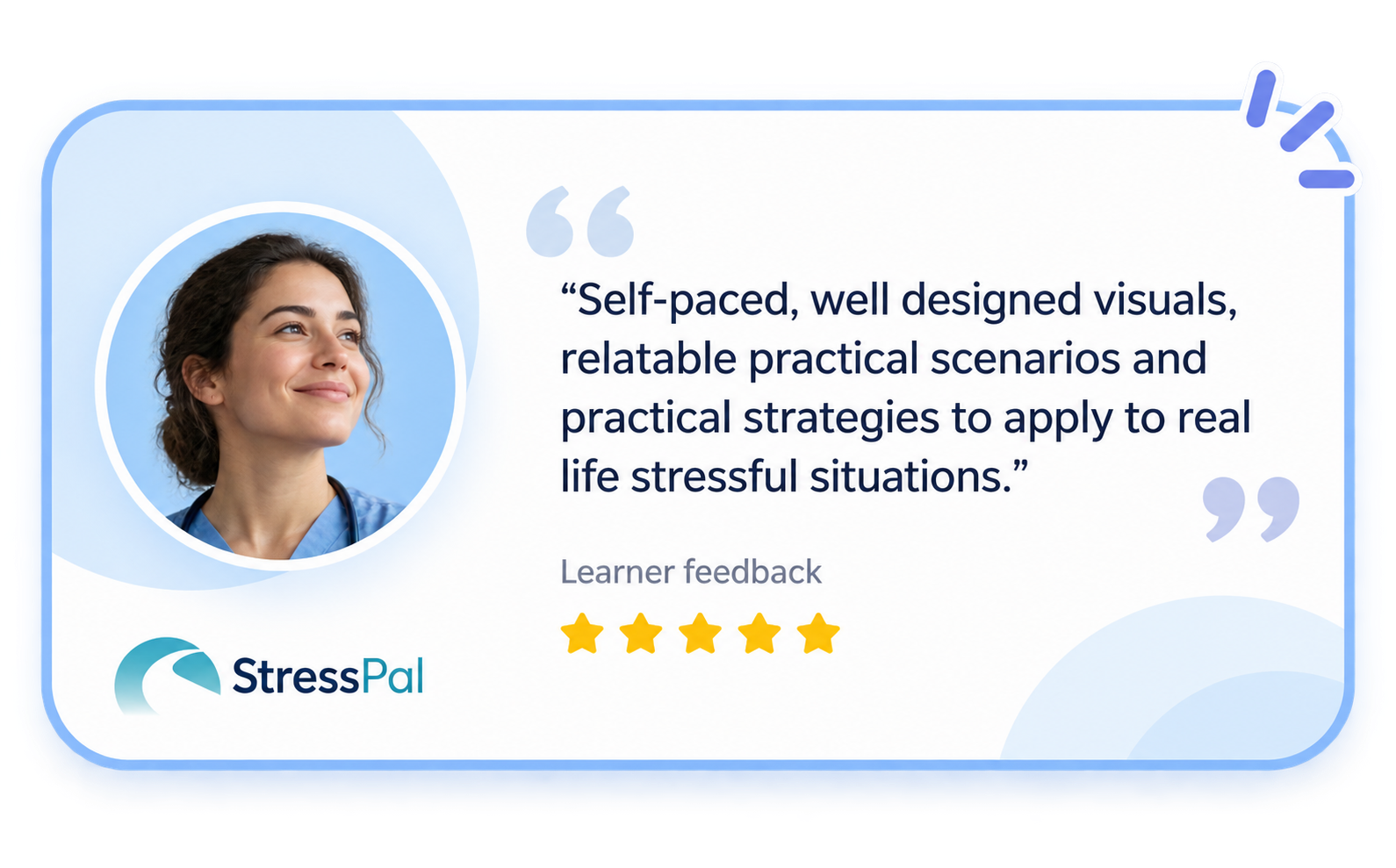
StressPal also received positive qualitative feedback from participants through anonymous free-text responses.
Some responses include:
Participants rated their agreement with the extent to which the program supported the achievement of specific learning objectives on a scale of 1 to 5.
The average ratings were:
These ratings indicate strong participant agreement that the program supported the achievement of its practical learning objectives.
Participants also rated their experience with the educational material and faculty on a scale of 1 to 5.
The average ratings were:
These ratings indicate that participants found both the educational material and the learning experience relevant, practical, and beneficial to their work.
StressPal found working with myQuest to be a positive and collaborative experience.
The myQuest team provided support throughout the development and implementation process, responding to feedback and working closely with StressPal as the program evolved.
Using myQuest enabled StressPal to deliver its resilience training to a broader audience, including physicians, nurses, administrators, technicians, allied professionals, and other healthcare workers.
The platform's self-directed structure, interactive learning activities, communication capabilities, and accessibility helped StressPal reduce logistical barriers while maintaining an experience centered around reflection, practice, peer support, and real-world application.
Most importantly, StressPal was able to move beyond simply delivering educational content.
The program achieved high training completion, strong participant ratings, and measurable improvements in perceived stress, with the latter now supported by peer-reviewed research.
For StressPal, myQuest provides the learning environment for translating evidence-based resilience expertise into an engaging, scalable digital program that healthcare professionals can actively apply in their everyday lives.
The StressPal Frontline program was evaluated in:
Resilience and Stress Among Health Care Workers Participating in the StressPal Frontline Program: Quasi-Experimental Pretest-Posttest Study
Goldberg DG, Monroe J, Sempell P, Cheema J, Vunnam S, Kitsantas P.
Published in JMIR Formative Research, 2026


