A manager watches a new team lead sit through a two-day workshop on difficult conversations. The lead takes notes, answers the quiz, and explains the model back perfectly. The following week, a team member pushes back on feedback, and the lead goes quiet, then changes the subject.
The lead knew what to do. They could not yet do it. That gap between knowing and doing is where most development efforts quietly lose their value.
Knowledge tells you what. Skill is what happens next.
Knowledge is something a person can recall or explain: the steps of a framework, the features of a product, the rules of a policy. Skill is something a person can perform, under real conditions, with a real person on the other side.
The two are related, but they are not the same thing. You can read about riding a bicycle for a year and still fall over on the first try. Work is no different. Explaining how to handle a pricing objection is one task. Handling it while a customer is frustrated and the clock is running is another.
Why a passed quiz proves so little
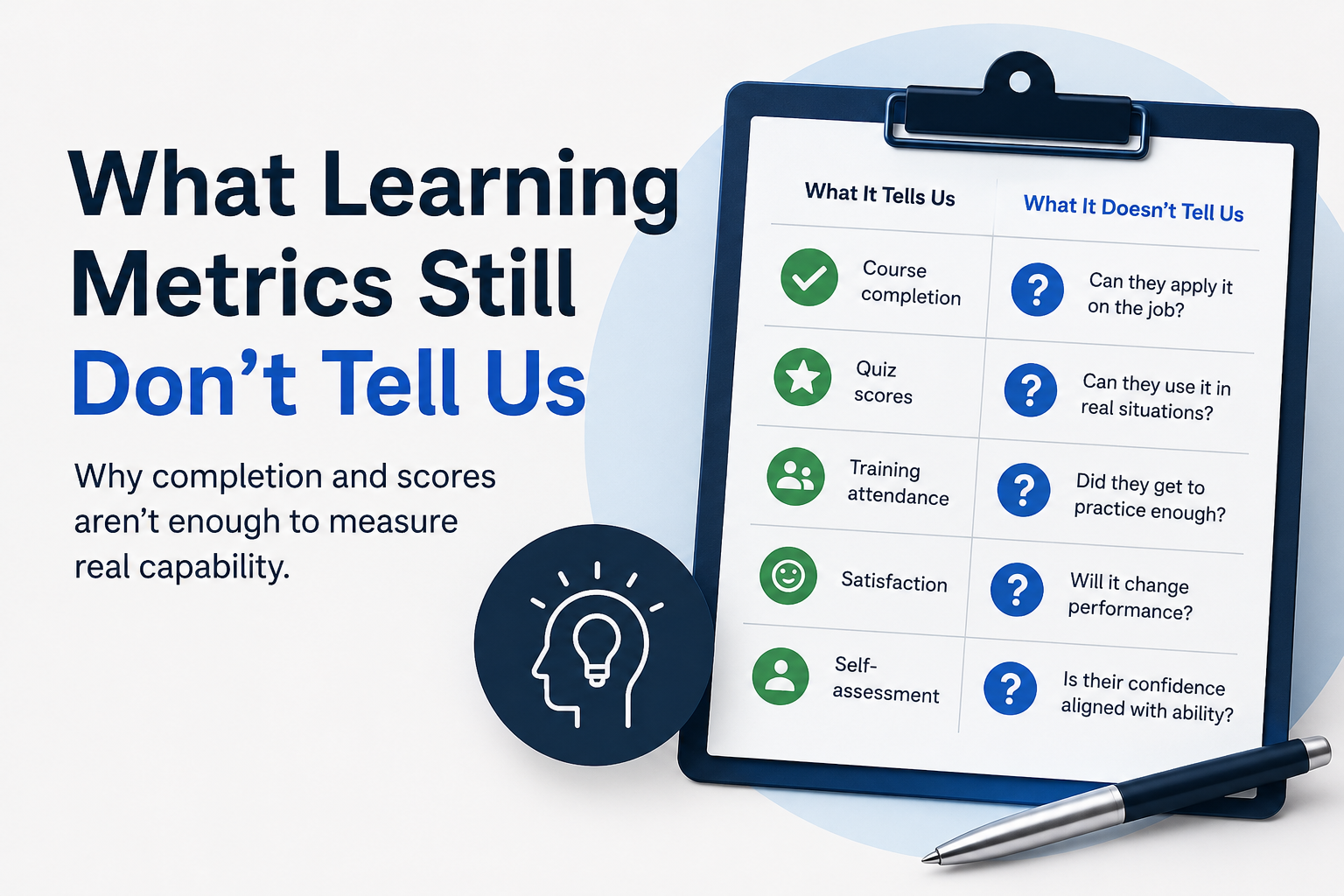
Most training measures what is easy to measure: attendance, completion, and quiz scores. All three show that information was delivered and received. None of them shows that behavior changed.
This is the point we made in what skill building actually means: a skill is built by doing the thing, getting feedback, and doing it again. A quiz sits before all of that. It checks recall, and recall is only the first stage.
The same pattern shows up in the lifecycle of a skill. In the skill lifecycle: acquire, apply, maintain, retire, we described how many programs are strong at the first stage and thin at the second. People see the idea, and then nobody checks whether they can apply it.
What goes wrong in the gap
Treating knowledge as skill causes a few predictable problems.
- False confidence. People who understand a concept often feel ready. The first live attempt then goes badly, and they lose trust in the training, or in themselves.
- Misleading reports. A dashboard full of completed courses suggests capability that may not exist. Leaders make decisions on that picture.
- Hidden cost. The work still gets done badly, so the organization pays twice. The pattern is the one described in why skill gaps quietly cost organizations money: rework, escalations, and manager time spent fixing things.
How knowing turns into doing
Moving from one to the other takes three ingredients, and content is only one of them.
A realistic situation. The practice has to resemble the job. A role-play with a tough customer, a mock review conversation, or a realistic case where the person has to speak and decide, not just choose from a list.
Specific feedback. After the attempt, the person needs to hear what worked and what to change. "Good job" teaches nothing. "You answered the price question before asking what mattered to them" teaches a lot.
Another attempt. Feedback only matters if the person tries again. The second attempt is where behavior starts to shift.
Notice that none of these require a person to know more. They require a person to do more, in situations close to real work.
How to tell whether someone can do it
If you want to know whether a skill exists, look for evidence of performance rather than evidence of exposure. Useful signals include how someone handles a realistic scenario, how their approach changes after feedback, and whether the result holds up the next time. These are measurable, and they tell you far more than whether a course was finished.
Be careful with self-ratings. They show how confident someone feels, which is useful information, but it is not the same as how they perform.
Where to start
Pick one skill that affects a result you already track, such as handling a hard conversation or responding to an objection. Ask what a person would actually do, say, or decide when it goes well. Then build a short practice situation around that, give feedback after each attempt, and let people try again.
Compare the first attempt with the third. That change is your evidence that knowledge has become skill.
myQuest Skills is one way to do this. It lets people practice realistic work situations with AI simulations and get feedback, and it shows managers where people are improving and where gaps remain.
Next in this series: how to assess skills: self-rating, manager review, tests, and observation